KRED launches Australia's first legal company owned exclusively by native title groups
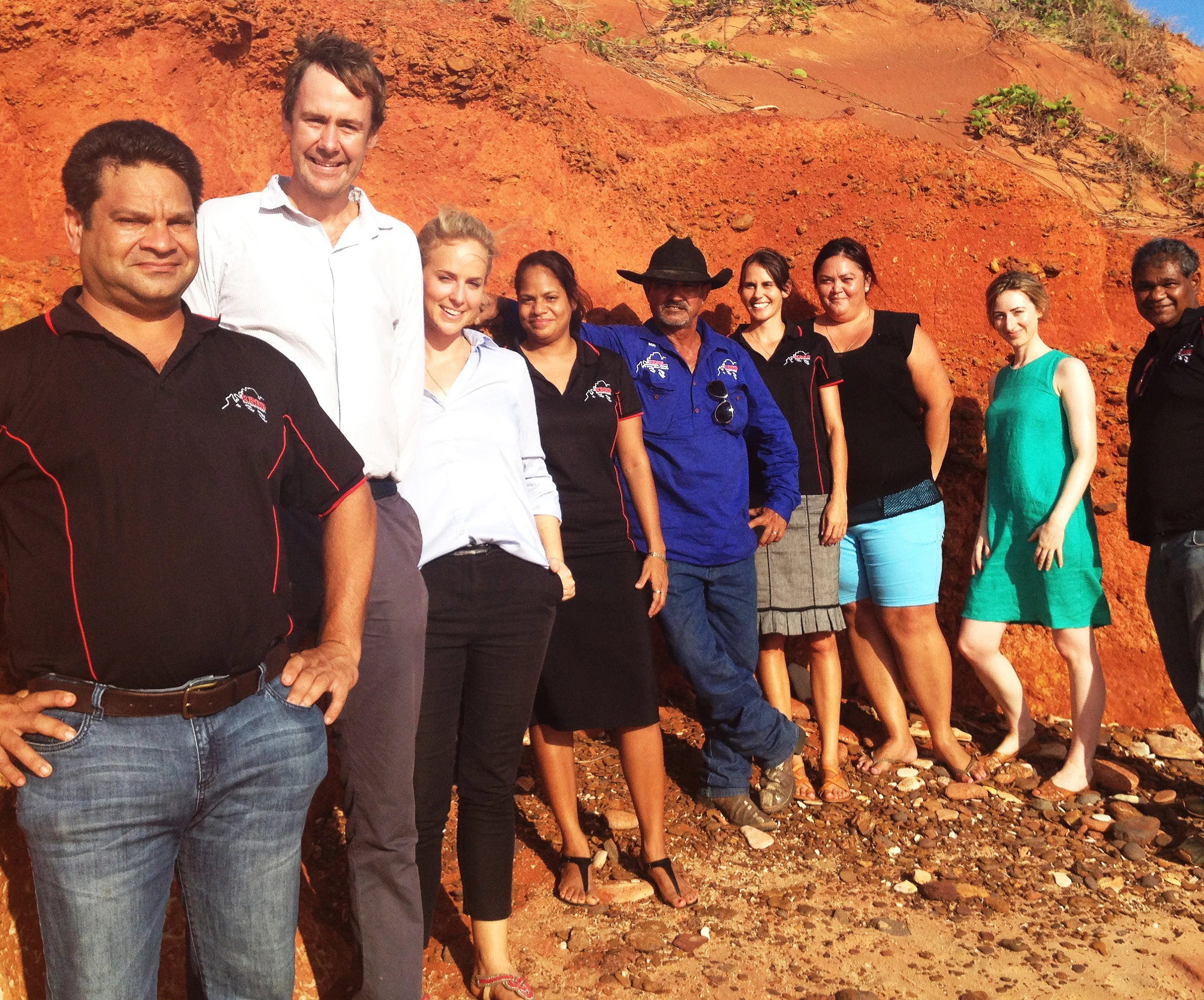
KRED Enterprises, the Broome-based charitable trust committed to Aboriginal economic development, is proud to launch KRED Legal, the first incorporated legal practice in Australia owned solely by native title groups.

KRED Legal has employed a team of 5 lawyers who will focus on native title law, contract law and commercial agreements.

KRED Legal Director, Wayne Bergmann, who is also the CEO of KRED Enterprises, says there was an urgent need to establish an Australia-wide Aboriginal-owned legal entity.

“Across Australia, we’re seeing intense pressure on Traditional Owners from proponents and companies wishing to access, explore or develop on our traditional Country. KRED Legal makes sure we have both a spear and a shield. We seek to ensure that any development on Country can only proceed when the highest environmental and cultural standards are in place. We have a team of lawyers who are raising the bar, who are working creatively and flexibly within Australian law to ensure the best outcomes for our mob,” Mr Bergmann says.

KRED Legal chooses to exclusively represent Traditional Owners, Prescribed Body Corporates, native title groups or Aboriginal-owned companies. 

“We encourage companies and developers to engage and negotiate directly with the authorised representatives nominated by native title groups. The companies that do engage directly with these representatives are reaching positive outcomes that benefit both parties. This generally creates better efficiency in decision-making. Aboriginal people need to be factored in to development, not simply seen as a hindrance,” Mr Bergmann says. 

KRED Legal knows prosperity is about three things: economy, people and culture, and Country. Our lawyers have a thorough understanding of the Western legal system and also a deep respect and understanding of Aboriginal culture. They have locked in a number of co-existence and heritage protection agreements with major companies operating in the Kimberley’s Canning Basin. These agreements are some of the strongest of their kind in Australia.

Chief Operations Officer of Yanunijarra Aboriginal Corporation and Director of KRED Enterprises Pty Limited, Peter Murray, says, “Country is everything to us. Control over country, our land, is so important to our health and spiritual well being. We’re confident KRED Legal are negotiating strong terms that protect our Country and provide a future for Aboriginal people in communities.”

KRED Legal is a wholly owned subsidiary of the Ambooriny Burru Foundation Group, which is owned by eight native title groups in the Kimberley: Bardi Jawi, Nyikina Mangala, Tjurabalan, Ngurrara, Yi-martuwarra Ngurrara, Jaru, Karajarri and Koongie-Elvire.

For more information, please contact KRED’s Media and Communications Officer, Madelaine Dickie, on (08) 91 928782, 0488 771 411 or madelaine@kred.org.au

Indigenous allowed no say on their own heritage

Screen Shot 2015-02-17 at 2.35.12 pm.png

This opinion piece appeared in the print edition of the West Australian on 17th February, 2015. It's by Ben Wyatt, shadow minister for Aboriginal affairs.

There are very few areas of public policy more important to Aboriginal people than the protection of heritage. Aboriginal people also know that, in the end, heritage locations are always sacrificed for the progress of industry. 

Between January 2008 and June 2013, the Department of Aboriginal Affairs received 646 applications pursuant to section 18 of the Aboriginal Heritage Act (applications for ministerial consent to 'excavate, destroy, damage, conceal or some way alter' an Aboriginal heritage site). Of these, only one was rejected. 

Clearly, the presence of Aboriginal heritage sites cannot be the excuse for lack of economic development. 

As a result, Aboriginal people have become adept at trying to ensure that if sites of cultural significance are going to be sacrificed (as they always are) an outcome needs to be negotiated to the benefit of those Aboriginal people. This is one area where Aboriginal people have shown extraordinary entrepreneurialism. It is, sadly, often the case that where Aboriginal people are required to show the most adept entrepreneurialism is in the face of government-designed processes. 

In the final week of Parliament last year, the Barnett Government introduced the Aboriginal Heritage Amendment Act. 

It is accepted across the political spectrum that the current Act, passed through Parliament two years before I was born and 20 years before the Mabo decision, is in need of a thorough overhaul. The Government's proposed changes take no consideration of Aboriginal people's aspirations in respect of heritage. 

The Act amendments were led by a discussion paper from John Avery in April 2012. This paper had seven proposals for consideration. The Bill introduced into Parliament by Deputy Premier Kim Hames has no connection to the points of discussion pursued by Avery. 

Aboriginal Affairs Minister Peter Collier, in a media statement on August 11, said: "Aboriginal stakeholders need to be across the detail of how the proposed reforms will be implemented and, in particular, how the State Government intends to ensure that the Aboriginal voice is included in decision-making." 

With the Barnett Government's amendments to the Act, the Aboriginal voice is almost absent. There is no recognition of ownership of heritage, no recognition of native title, no recognition of anything beyond the overriding control and decision-making of the chief of the Department of Aboriginal Affairs. 

The chief executive is to be the sole arbiter of what places are to be preserved and how they are to be preserved. Incredibly, the chief executive has the sole authority to declare there is no Aboriginal site on any land. 

Not one Aboriginal person need be spoken to. Every decision is to be made by the chief executive. There is no mandated involvement for Aboriginal people. 

Before his death, my father, a former chief executive of the department, was aghast at the reduction of the status of Aboriginal people to passive bystanders in the management of their heritage. 

Aboriginal people never expected to be given some overriding power over industry, but we did expect, at the very least, the right to be spoken to. Consulted, engaged, informed. 

The Government has missed a huge opportunity. An old piece of legislation, which all agree was in dire need of review, is now presented as nothing ore than removing Aboriginal people from the process of recognising and protecting their heritage. 

Late last year, a respected group of Aboriginal leaders came to Parliament. They presented a petition to Brendon Grylls and myself. They met with Mr Collier, who advised the group there would be more consultation and negotiation around the wording of the draft Bill before it was introduced this year. But one week later the Bill was introduced into Parliament, unchanged. 

It will pass the Parliament because the Government has the numbers. But the trashing of goodwill and lack of any support or acceptance from Aboriginal people means that the protection and management of Aboriginal heritage sites will be a political issue for years to come. 

Ultimately, the biggest losers will be Aboriginal people, again preoccupied with protecting and preserving their own culture and unable to do what we all want to be done: directing energies into creating and pursuing opportunities. 

Ben Wyatt is the WA shadow minister for Aboriginal affairs. 


Notice of Authorisation Meeting for the NYIKINA MANGALA PEOPLE and Members of the KARAJARRI YANJA native title claim group (WAD 295/2012)

WHERE: Yurmulun (Pandanus Park) Community
WHEN: Wednesday 4th March to Thursday 5th March 2015 (2 Days of Meetings)
START: 8.30am for registration, meeting starts at 9am on all days

WHO IS INVITED: All members of the Karajarri Yanja native title claim group (WAD295/2012) being those persons who are the descendants of the following named apical ancestors (please be advised that the following contains names of deceased persons):
Nganara, Minyirr Palajangka, Ingala [2] and Yanadu “Mutpi” and
All Nyikina Mangala People being those persons who are the descendants of the following named apical ancestors (please be advised that the following contains names of deceased persons):
Marrkal and Minbukar and Kinara and Karlmurl; Ngurkwan, Yayika and Minyang; Polly Wurrayin and Charlie Djawali, Bundangurra and Jambo; Intiri and Nulanula, and Yawingka and Kalyuka; Kitty Kujaja and Charlie Mangurl; Lucy Muninga and Edward Yedawarra and unnamed mother of Fulgentius Fraser; Maggie Nimbanirl; Dim and the mother of Bobby Ah Choo; Bundangurra and Mabel Ah Chee; Jimgula; Niyna Philomena; Kupa and Ngamariny; Gurupirin; Nani; Jinangkal and Nyuntunga; Yana and Nyani, Ngata and Kalkululu; Andy Marunjari and Marjory Spratt and her unnamed mother; Wilidi and Muna and Tutu and Warda; Muwa and Nijajira; Bobby Yingirr and Molly, and Latpij and Wayurl ; Nipper Tapaji and his father Larry; Cissy Punturu and Dan Palangga; Tommy Numarid.

BACKGROUND: KRED Enterprises Pty Ltd, on behalf of the Karajarri Yanja native title claim group (WAD295/2012) and the Walalakoo Aboriginal Corporation Registered Native Title Body Corporate ICN 8041 (“the native title groups”), has been negotiating a Coexistence Agreement with Buru Energy Ltd in relation to two petroleum production licences that have been applied for by Buru Energy Ltd and Diamond Resources (Fitzroy) Pty Ltd at Ungani. The negotiation of the Coexistence Agreement between Buru Energy Ltd, Diamond Resources (Fitzroy) Pty Ltd, Mitsubishi Corporation, the native title groups and KRED, is complete and will be presented to the Karajarri Yanja native title claim group and the Nyikina Mangala People to consider on 4th and 5th March 2015. In addition to the Coexistence Agreement, an Indigenous Land Use Agreement (ILUA) will also be presented to the Nyikina Mangala People for consideration. If registered, the ILUA would authorise the construction of the proposed Ungani Project load-out facility and the proposed Ungani Project access road and pipeline corridor, on the basis that their construction will not permanently extinguish the determined native title rights and interests over the affected areas.

Map: Ungani Project Coexistence Agreement and Indigenous Land Use Agreement

The two Ungani petroleum production licence areas are outlined in green; The production licence area that overlaps the Karajarri Yanja claim area is marked in orange; The petroleum production licence area that overlaps the Nyikina Mangala determined native title area is marked in green and the remainder of the Nyikina Mangala determined native title area is marked in blue shading; The proposed load out facility easement is marked ‘A’, the proposed access road and project pipeline corridor is marked ‘B’.

AGENDA:
DAY ONE Joint briefing session with the Karajarri Yanja native title claim group and the Nyikina Mangala People on the contents of the Ungani Project Coexistence Agreement and briefing session with the Nyikina Mangala People on the ILUA for the proposed Ungani Project access road, pipeline and load out facility easements.

DAY TWO Authorisation
Part 1        Nyikina Mangala People’s Authorisation of the Ungani Project Co-existence            Agreementa and ILUA;
Part 2        Nyikina Mangala People’s Consent to the Walalakoo Aboriginal Corporation Registered Native Title Body Corporate ICN 8041 entering into the Ungani Project Co-existence Agreement and the ILUA;
Part 3        Karajarri Yanja native title claim group’s Authorisation of the Ungani Project Co-existence Agreement;
Part 4        Karajarri Yanja native title claim group’s Authorising the Applicant.

The Authorisation meeting is being called to consider:
1) The Karajarri Yanja native title claim group deciding whether they authorise the Karajarri Yanja named Applicant to sign the Ungani Project Co-existence Agreement consenting to:
i. the grant of two adjacent petroleum production licences under Section 31 of the Native Title Act 1993 (Cth); and
ii. the grant of an Ungani Project pipeline easement and an Ungani Project highway depot easement.
2) Any other business
and
1) The Nyikina Mangala people deciding whether they consent to the Walalakoo Aboriginal Corporation Registered Native Title Body Corporate ICN 8041 signing the Ungani Project Co-existence Agreement, which involves consenting to:
i. the grant of two adjacent petroleum production licences under Section 31 of the Native Title Act 1993 (Cth); and
ii. the grant of an Ungani Project access road and pipeline easement and an Ungani Project load out facility easement through an ILUA.
2) Any other business.

Please Note: Limited travel & accommodation assistance can be provided. For arrangements please contact Shaha Bin Sulaiman on 0488 440 211 or (08) 9192 8782 at EHSIS office no later than 23 February 2015. Any legal questions should be directed to Rob Houston or Hayley Haas on (08) 9192 8782.


The man from Bohemia Downs

In most communities or towns there are one or perhaps two remarkable people who work twice as hard as the rest of us. They build their communities with wisdom and warmth. They contribute to other organisations and projects as well as working full time. They have the patience and bigness of spirit to pass on their knowledge to younger generations. They are generous, almost always to a fault. 

Mr Lawford was such a person. 

As you all know, he was the station manager at Bohemia Downs for many years. The pastoral industry is one of the hardest industries to make a living from yet despite the turmoil of politics and devastating ban on live exports, Mr Lawford was able to keep the station, his family and the community going. He worked to ensure the community and station shared resources and were fully integrated. He restored and transformed the country, using traditional and western land management techniques. 

Mr Lawford was a trailblazer, a risk-taker. Chairperson of the Kimberley Regional Fire Management Project, he was one of the first people to test early burning regimes on Bohemia Downs. The tests were a success, and not long after, neighbouring stations began to do the same thing. Now, similar fire management techniques are used across the whole of the Kimberley. Mr Lawford was never selfish with his knowledge and he shared these findings both locally and regionally, including as part of the Kimberley Appropriate Economies Roundtable Project in 2005. 

His commitment to his community didn't end here. Mr Lawford was involved in many, many other projects and took on various roles over the years in addition to managing Bohemia Downs. He sat on the West Australian Pastoral Lands Board, was the chairperson at Kupartiya, was the ranger development officer appointed to assist the Wangkatjungka and Gooniyandi Rangers, and was a graduate of both the Australian Rural Leadership Program and the Grazing for Profit School. 

Significantly, Mr Lawford was the chairperson of the Kimberley Aboriginal Pastoralists Incorporated (also known as KAPA) and had been a board member since KAPA/KAPI began. One of his greatest qualities as chairperson was his compassion. He always made sure everyone had a say and he didn't turn his back on people. He didn't ignore them.

This was a quality he also brought to his role as a teacher and a trainer. He held a Certificate IV in Workplace Training and Assessment and delivered both formal training at Billiluna and informal training. One of the informal training packages was called 'Station Business'. The course was delivered a number of times over a five-year period through Management Services Unit Aboriginal Corporation, of which he was a director. The idea of the training was to help local people in communities and people working on stations to learn about corporate governance and management. The course took an intensive seven days to complete and usually ran with a minimum of twenty people. In a testament to Mr Lawford's charisma and knowledge, he never had a single person drop out of the course. Everyone stayed the full seven days. 

Communities become strong through the sharing of knowledge. Mr Lawford was involved with the Yirriman Project, and he understood the importance of sharing stories and teaching young people how to hunt and look after country. In recent months, he was also trying to establish an art and craft workshop at Kupartiya, not as a commercial space, but as a space to involve, engage and teach young people. Although station life took up most of his time, Mr Lawford was a fine artist and even studied art for a time in Perth. Sometimes he would sketch in meetings. His drawings have been described as extraordinary. 

Recently, Mr Lawford worked as a full-time project manager with KRED Enterprises to help establish the Kimberley Aboriginal Pastoral Co-op. KRED was proud to have him onboard. He brought to this role a wealth of knowledge and expertise, with his strong sense of traditional law and culture, and his equally strong sense for business and training. He was a man who was very comfortable walking in both worlds and he shared a vision for revitalisation of the Aboriginal pastoral industry across the Kimberley. 

Mr Lawford had the quiet pride and posture of a good cattleman. Always humble, always giving, he found himself, perhaps unexpectedly, starring in documentaries, making the front page of national newspapers, and contributing to research run by AIATSIS, the Department of Water and Environs Kimberley. He had a long involvement with the Kimberley Land Council, including representing the Kurungal native title claim on the KLC Executive Committee between 2004-2006. 

He touched lives not just in the Kimberley, but in the Northern Territory and across Australia. He will be remembered in his community as a strong culture man, a committed and innovative pastoralist, an artist and a teacher. He will be remembered as a man who was approachable and generous and who had the great gift of bringing people together. 

We will deeply miss him. 


A basketball team's like a five fingered fist

Headhunters first came after him at age 12. He had the physique for the game. He had the talent for the game. And he had the hunger for the game. Four years on, Broome’s rising basketball star Gerrard Ansey is proving he also has that special combination of discipline and drive that distinguishes a merely good athlete from an elite athlete.

Gerrard, who’s just about to tackle year 11, plays school basketball for Christ Church Grammar School, club basketball for Perry Lakes Hawks, and WA state basketball.

KRED Enterprises offered Gerrard a Nipper Tabagee Scholarship in 2014 so he could represent Western Australia at the U16 Metro Men’s Australian Junior Championships in Geelong.

We’re committed to helping young Indigenous people realise their aspirations and Gerrard has worked hard to get where he is.

He has a rigorous training regime; some mornings he’s out of bed at 5.30am to hit the courts ahead of a full day at school. In the first and fourth term he has Sundays free, but in the middle of the year, he plays or trains seven days a week. Gerrard says training for the state side was particularly challenging and rewarding.

“State training really helped me a lot with my fitness, my strength and my conditioning. I really enjoy the training,” he says.

Also the recipient of a six-year school scholarship, the pressure is on to show commitment to both his schoolwork and the school basketball team.

In 2013, with Gerrard one of the youngest players on the team, the school won the Blackwood Cup for the Public Schools Association for the first time in eleven years. The same year, Gerrard received the Pat Holmes Award, which is awarded to a year 9 student who has, ‘ . . . displayed selflessness and dedication to his team; a commitment to self-improvement; impeccable sporting manners; humility on the field and enthusiasm for his sport. Moreover, the recipient must be both a good winner and a good loser.’

These qualities have been recognised by other clubs in the Western Australian Basketball League (WABL) and there have even been several attempts to poach him. But Gerry’s remained loyal to Perry Lakes and stayed with his team.

The famous American coach Mike Krzyzewski is quoted as saying, “A basketball team is like the five fingers on your hand. If you can get them all together, you have a fist. That's how I want you to play.”

Gerrard understands that to make this fist, you need to have a good relationship with your teammates, both on and off the court.

“Once we were comfortable with each other off the court, it felt a lot easier playing with them, there was a much better feeling among the team,” Gerrard says. 

You also need to have a good relationship with your coach and Gerrard has seen a whole range of coaching styles, from the ‘yellers’ to the ‘throwers’ to the ‘silent types’.

“I do get the most out of myself when there’s a loud coach, or an angry coach. At the same time, some of the assistant coaches I’ve had have been chilled and laid back, without yelling, so it’s good to have that balance,” Gerrard says.

This year, Gerrard Ansey is poised to meet his biggest challenge yet. Although he’s only fifteen, he’s been selected to play in the U20s side at the Eltham Dandenong Junior Basketball Tournament in January. The tournament is one of the largest of its kind in the world.

Beyond this tournament, and with two years left of school, Gerrard’s aware of some of the limitations of playing sport professionally in Australia.

“After school, I’m aiming to get over to the US. The US has better basketball programs than Australia and it’s easier to make a living playing basketball.”

KRED Enterprises has been proud to assist Gerrard Ansey and we believe advancing the education of our people will prove to be one of our greatest investments. Our young people deserve the best support possible so they can live healthy, fulfilled lives, where they walk comfortably in both worlds. 

Keen to know more about the scholarships? 

As KRED receives no government funding, all the money we earn is used to pay staff wages. Any surplus income is put into our sharing bucket, which is owned by the members of Ambooriny Burru. These members are: Karajarri, Nyikina Mangala, Ngurrara, Bardi Jawi, Yi-Martuwarra Ngurrara, Jaru, Tjurabalan and Koongie Elvire. The sharing bucket is what we draw on to award scholarships.

In 2015, scholarship priority will be given to our members. 

Apply now!