KRED Enterprises awards scholarship to budding Broome star
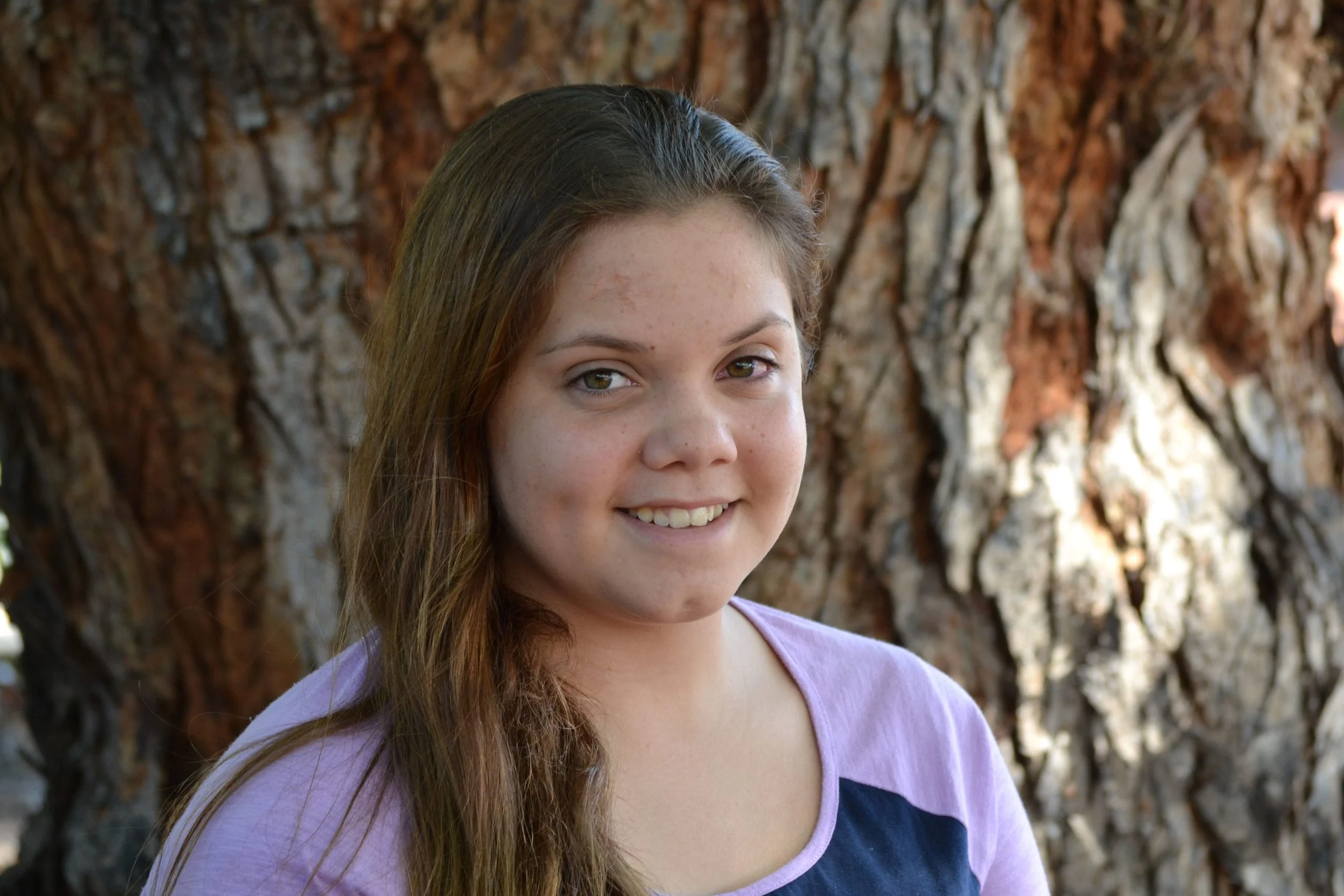
Cheyenne Carter is hooked on a book about gangs, switchblades, & class-driven brawls. S.E Hinton’s 1967 classic novel The Outsiders is on the year 9 curriculum at Iona Presentation College and it also happens to be Cheyenne’s favourite. “It’s teaching me you can’t judge a book by its cover, there’s always a lot more to the story in terms of people,” she says. 

There’s definitely more to the story with Cheyenne—although it’s only her first year studying in Perth, she’s no ordinary Broome boarder. Cheyenne has a passion for the performing arts and a keen desire to improve and excel.  


Last year, she starred in a short film Maap Mordak. She plays an Aboriginal girl who’s teased at school for not being black enough, for being fair-skinned. Every night, she goes home crying to her nanna and her deceased grandfather. The film offers an unexpected and cutting twist at the end.

“It’s not a comedy, it’s quite powerful and sad,” she says. “From doing this project, I  think I want to go into film, I want to try and focus on that area. I really liked it and thought it was really fun.”


She’s further sharpening up her acting skills by studying drama at school. Last term, the focus was mime, and she picked Charlie Chaplin’s ‘The Adventurer’ to analyse in detail. Chaplin plays an escaped convict—he saves a drowning woman and dodges the woman’s husband, who’s eager to see him seized by police. It was described in the New York Times in 1920 as, ‘ . . . some of Chaplin’s most irresistible pantomime.’ Cheyenne used this piece to learn from and inform her own mime.

Performance aside, Cheyenne has found that the shift from Broome to Iona has meant a whole heap of new experiences: sporting, social and academic. She’s had the chance to hang out with girls from all different years at high school, got to play water polo and tennis, and has been taking on extra tutoring support so she can keep on top of all her subjects. 

KRED Enterprises was proud to offer Cheyenne a Nipper Tabagee Scholarship to assist with this transition.

“Having a scholarship has really helped me because the costs are huge. There’s the airfares, school fees, uniforms . . .” she says.


We offer one-off scholarships of up to $2000 to assist our people to pursue their artistic, sporting or educational endeavours. The scholarships are named after Nipper Tabagee, a senior and respected man who worked tirelessly during his life to encourage Aboriginal people to work together to achieve justice on land issues. He was an inspiration to many young people. 

For anyone hoping to apply for a scholarship, Cheyenne has the following advice, “Make sure you’re organised and go for it! I’ve already had so many opportunities since the move.”


So what next then, for Cheyenne?  After she gets through this first chilly winter in Perth, and then the next four years of classes, she has her sights set on Paris.

“I would love to see the Eiffel Tower and the galleries, it’s been my dream since I was a little kid!”

If you have a dream but need one-off financial assistance to help you realise it, follow the links to the ‘Scholarships’ page on this website where you can apply online. Our next round of scholarships closes on the 31ST of May. Due to an overwhelming number of applications, we give preference to people from the native title groups that are members of the Ambooriny Burru Foundation (which owns KRED Enterprises). These groups are: Ngurrara, Bardi Jawi, Nyikina Mangala, Jaru, Yi-martuwarra Ngurrara, Koongie Elvire, Tjurabalan and Karajarri. We hope to hear from you!
Punished for the consecutive failures of government

We heard last week that the South Australian government would continue to provide municipal and essential services to remote Aboriginal communities in the face of federal funding cuts.

The state government in Western Australia is showing no such leadership. Barnett’s government is holding a position steeped in ideology, rather than grounded in sound economic policy.  

WA has been the engine room of Australia’s economy.

A joint bankwest/Curtin University study in 2014, reports that our GDP grew by 5.1% between 2012 and 2013, well above the national average of 2.6% during the same period. We have vast oil, gas and mineral resources.

Why then, do we have a state government, unable to provide even basic services to its people? 

It seems to us that the closure of remote Aboriginal communities is not about cost cutting—the fallout of community closures is likely to cost the government much more in the long-term—it’s about power.

We see it this way.

If we are moved out of communities, back to towns, this limits our ability to practise our native title rights. That is, the right to possess, occupy, use and enjoy the land and waters in our native title determination. Our ability to keep and maintain these rights, this power, is connected to our continued use of country. Prevent us from living on country and you start to erode these rights.

This government doesn’t want Aboriginal people in positions of power or control.

Through KRED Enterprises and the PBCs we represent, we are working hard to create a powerbase that will provide sustainable economic opportunities in remote communities. Our aim is to build businesses and jobs that mean our people can live on country, in remote communities, and continue to practise our culture and exercise our native title rights.

If the government was serious about addressing issues in communities, such as unemployment, they should look to investing in and supporting Aboriginal-run organisations and PBCs already on the ground. In numerous reports delivered to government, from the Crocodile Hole Report (1991) to the Elders’ Report into Preventing Self-Harm and Youth Suicide (2014), the message has always been the same. Consult with us. Listen to us. Fund the organisations our old people set up so we have the power of self-determination, so we have the capacity to tackle these issues ourselves.

But it falls on deaf ears.

And history repeats.

We’re being punished, again, for the consecutive failures of government.

Kimberley Traditional Owners negotiate strong agreement over Ungani oil

KRED Enterprises is a not-for-profit Aboriginal charitable trust, owned by the Ambooriny Burru Foundation. Ambooriny Burru is made up of eight native title claim groups from across the Kimberley.

KRED Enterprises, Walalakoo Aboriginal Corporation and Karajarri Yanja have successfully negotiated a coexistence agreement with the Mitsubishi-Buru Energy joint venture.

The Ungani Project Co-existence Agreement relates to Mitsubishi-Buru’s oil production licences at the Ungani oil field, located on an important slice of the determined Nyikina Mangala native title area and the Karajarri Yanja native title claim.

The representatives of the Nyikina Mangala and Karajarri groups were authorised to enter into the agreement today at a meeting at Pandanus Park community, 60km south of Derby.             

KRED Enterprises’ CEO Wayne Bergmann says he’s confident the strongest environmental and cultural heritage protection is in place.

‘The decision to take this agreement to the entire native title groups was not made lightly. KRED Enterprises has been fighting hard to come to a mutually acceptable terms, which balances adequate compensation and scope for Indigenous economic development, with comprehensive environmental and cultural heritage protection,” Mr Bergmann says.

For the last 18 months, the joint venture has extracted and trucked oil without any production agreement in place. This means there has been no compensation for Traditional Owners. Under the agreement, Traditional Owners will now be entitled to the outstanding amounts owed them and have a say over responsible development on their country.

“While we applaud Mitsubishi-Buru for exercising their corporate social responsibility we are also aware the native title system creates an uneven playing field,” Mr Bergmann says.

KRED Enterprises is negotiating some of the strongest agreements for Traditional Owners in Australia. We support Traditional Owners to make the best decisions possible about what happens on their country.

www.kred.org.au

http://instagram.com/kredenterprises/

https://www.facebook.com/KREDEnterprises

https://twitter.com/KREDEnterprises

http://www.linkedin.com/company/kred-enterprises

KRED welcomes new chairman

KRED Enterprises, a charitable trust committed to Aboriginal economic development, is proud to introduce its new chairman, Peter Murray.

Mr Murray is a Ngurrara Traditional Owner from the Great Sandy Desert and he brings to the role a wealth of experience, from enterprise development, to a deep understanding of the importance of cultural and heritage protection.  

Mr Murray says he’s thrilled at the opportunity to help grow and shape the vision for KRED Enterprises.


“KRED’s great strength lies in the fact that we—Traditional Owners—are standing together in a cultural block and making our own decisions about what happens on our traditional lands. With KRED’s work now directed by eight native title groups in the Kimberley, we represent people from the desert, through the river country and to the sea. By standing together, we are strong.

“KRED’s former chairman, Anthony Watson, did a wonderful job. He worked tirelessly, had a profound social conscience and I know he’ll be missed. I’m honoured and proud to be taking his place, and I look forward to engaging and listening to Traditional Owners to ensure that we continue to get the best outcomes for our mob,” Mr Murray says.

Currently, Mr Murray is the Chief Operations Officer of Yanunijarra Aboriginal Corporation, but in previous roles, he’s established the Kimberley Land Council’s Ngurrara ranger program, worked as the Ngurrara Indigenous Protected Area manager and served with the Western Australia Police.

Outgoing chairman Anthony Watson, who has been with KRED Enterprises since its establishment four years ago, has now resigned to take on a position as Chairman of the Kimberley Land Council.

“I’m grateful to have had the opportunity to serve our members and confident KRED will continue to negotiate strong agreements between resource companies and Traditional Owners. I’m also confident KRED will continue to grow its sharing bucket to be used for social support and community benefits for all our members,” Mr Watson says. 

KRED launches Australia's first legal company owned exclusively by native title groups

KRED Enterprises, the Broome-based charitable trust committed to Aboriginal economic development, is proud to launch KRED Legal, the first incorporated legal practice in Australia owned solely by native title groups.

KRED Legal has employed a team of 5 lawyers who will focus on native title law, contract law and commercial agreements.

KRED Legal Director, Wayne Bergmann, who is also the CEO of KRED Enterprises, says there was an urgent need to establish an Australia-wide Aboriginal-owned legal entity.

“Across Australia, we’re seeing intense pressure on Traditional Owners from proponents and companies wishing to access, explore or develop on our traditional Country. KRED Legal makes sure we have both a spear and a shield. We seek to ensure that any development on Country can only proceed when the highest environmental and cultural standards are in place. We have a team of lawyers who are raising the bar, who are working creatively and flexibly within Australian law to ensure the best outcomes for our mob,” Mr Bergmann says.

KRED Legal chooses to exclusively represent Traditional Owners, Prescribed Body Corporates, native title groups or Aboriginal-owned companies. 

“We encourage companies and developers to engage and negotiate directly with the authorised representatives nominated by native title groups. The companies that do engage directly with these representatives are reaching positive outcomes that benefit both parties. This generally creates better efficiency in decision-making. Aboriginal people need to be factored in to development, not simply seen as a hindrance,” Mr Bergmann says. 

KRED Legal knows prosperity is about three things: economy, people and culture, and Country. Our lawyers have a thorough understanding of the Western legal system and also a deep respect and understanding of Aboriginal culture. They have locked in a number of co-existence and heritage protection agreements with major companies operating in the Kimberley’s Canning Basin. These agreements are some of the strongest of their kind in Australia.

Chief Operations Officer of Yanunijarra Aboriginal Corporation and Director of KRED Enterprises Pty Limited, Peter Murray, says, “Country is everything to us. Control over country, our land, is so important to our health and spiritual well being. We’re confident KRED Legal are negotiating strong terms that protect our Country and provide a future for Aboriginal people in communities.”

KRED Legal is a wholly owned subsidiary of the Ambooriny Burru Foundation Group, which is owned by eight native title groups in the Kimberley: Bardi Jawi, Nyikina Mangala, Tjurabalan, Ngurrara, Yi-martuwarra Ngurrara, Jaru, Karajarri and Koongie-Elvire.

For more information, please contact KRED’s Media and Communications Officer, Madelaine Dickie, on (08) 91 928782, 0488 771 411 or madelaine@kred.org.au